| |
 |
| |
The Problem
Algae growth in aerated lagoon systems, ponds or waste water treatment plants can increase both the total suspended solids (TSS) and the carbonaceous biological oxygen demand (CBOD5) of the effluent. This can cause false high biological oxygen demand (BOD) and TSS levels in the final effluent. Excess algae can also create nuisance surface scum, poor water clarity, and noxious odors. The odorous compounds released by algae (periphytic algae) are difficult to remove in water treatment plants and cause nuisance odors (earthy-musty) in drinking water. Algae clogs pumps, causes short circuiting if build-up is on the weirs of a clarifier, which can lead to plant shutdowns. |
|
|
DARTMOUTH WASTE WATER TREATMENT PLANT - DARTMOUTH, MA
12 Month Bi-fouling Panel Test
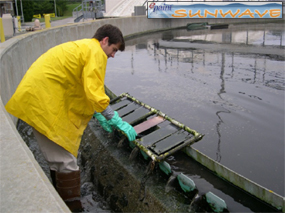
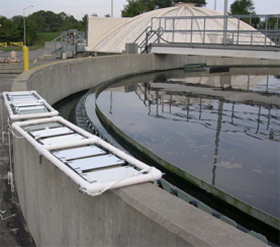
SUNWAVE® performance was demonstrated in 2004 through a series of biofouling exposure tests at the Dartmouth, Massachusetts WWTP. This testing was facilitated by the Massachusetts Strategic Envirotechnology Partnership Program (STEP) and was designed to demonstrate and validate SUNWAVE® use on clarifiers.
The STEP project task force (which comprised Executive Office for Environmental Affairs, DEP Southeast regional office, Scituate Wastewater Treatment Plant, Fairhaven Water Pollution Control Facility, Chatham Water & Sewer Department, Rockland Wastewater Treatment Plant, Dartmouth Department of Public Works, and the University of Massachusetts Dartmouth) carried out the work plan to validate SUNWAVE® performance.
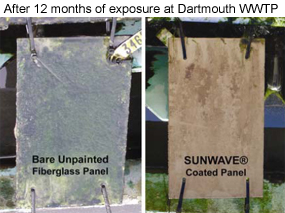
After 12 months exposure in the nutrient rich waste-waters of the Dartmouth WWTP, SUNWAVE® coated surfaces are algae-free.
|